Back to work

Scaling Teams Rooms 4.7x during the hybrid work shift

$34M → $160M
Business scaled in 2 years
94%
Increase in active devices
30%
Lift in paid conversion

Domain

Microsoft Teams devices

Year

2021 — 2023

Role

GTM Strategy Lead

Team

Sales, PM, Eng, Partner, OEMs

Overview

In 2021, hybrid work created one of the largest collaboration technology opportunities in decades. Organizations were investing heavily in conference rooms, and Microsoft Teams Rooms was positioned at the center of that transformation.

The business was growing, generating $34M in annual revenue, but the market opportunity suggested it could be much larger. As I examined the customer journey, a pattern emerged: adoption wasn't constrained by product quality or market demand. It was being slowed by friction across the broader ecosystem.

When I mapped the journey end to end, three distinct barriers emerged.

01

A fragmented six-layer channel

Microsoft built the software, OEMs built the hardware, and five additional partners stood between us and the customer.

02

Entrenched competition

Cisco owned the installed base, while BYOD offered a cheaper alternative. We needed a stronger reason to choose Teams Rooms.

03

Seller friction

Room systems were complex to configure and sell. Most sellers avoided the category altogether.

Together, these barriers created friction at every stage of the buying journey. Customers struggled to understand what to buy, partners struggled to explain the value, and sellers struggled to bring deals across the finish line.

The sales channel: six layers, one message to carry

Microsoft Teams App
Software
OEM Partners
Hardware
AV Distributors
Distribution
AV / SW Resellers
Resellers
MSPs / Retailers
End delivery
Enterprise Customer
Buyer

Strategy

Once I mapped the customer and partner journey, a pattern emerged: every stage had a different reason for saying no. Some customers didn't know where to start. Sellers avoided the category because it felt complicated. Partners lacked a consistent narrative. The strategy was straightforward: remove those barriers one by one.

01

Simplify the buying decision

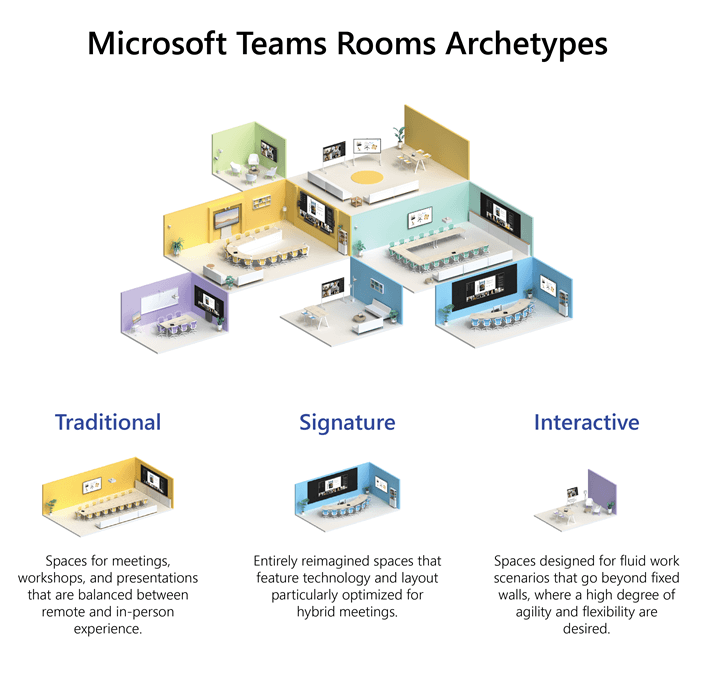
Created Room Archetypes, a modular catalogue of recommended room configurations that gave customers and partners a clear starting point without favoring any single OEM partner. Within six months, 90% of top partners adopted the framework.
02

Make the right sales motion obvious

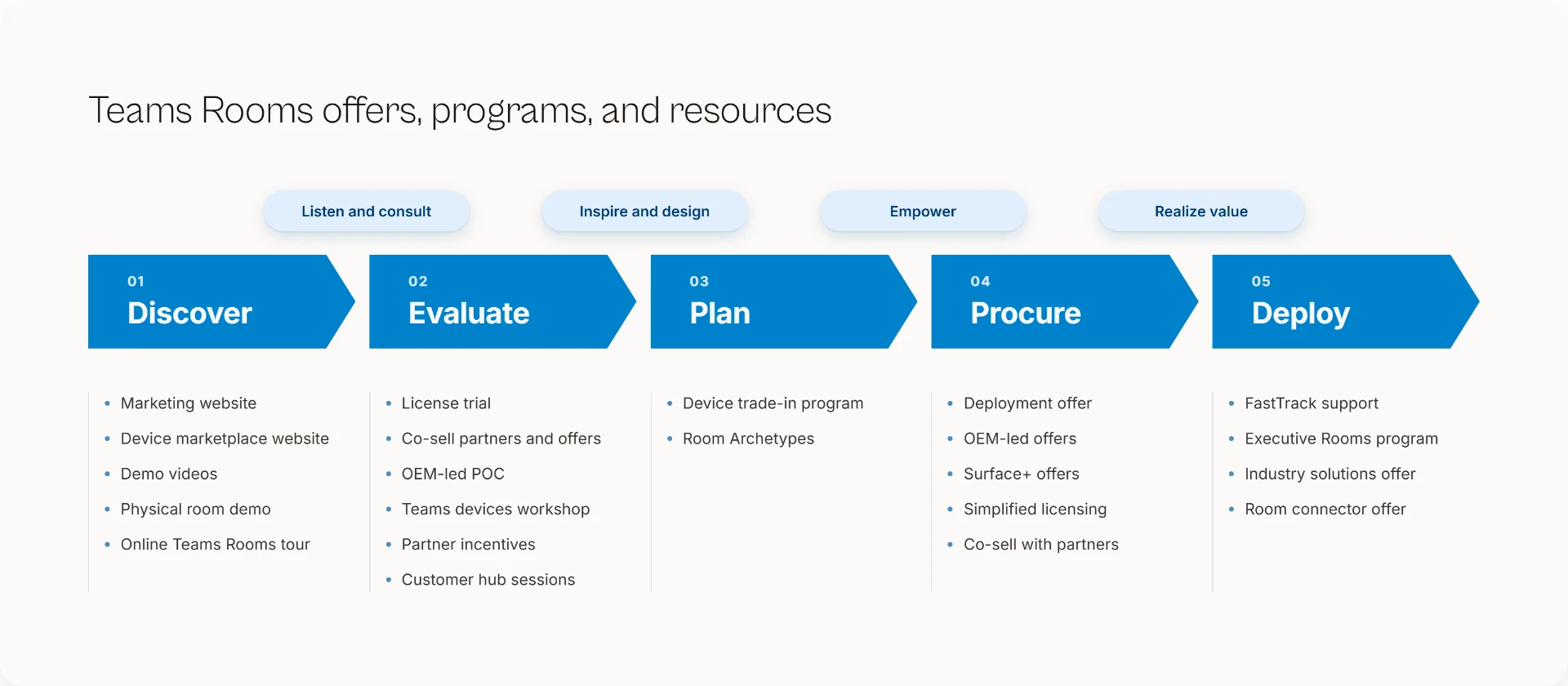
Developed a GTM Programs Playbook that consolidated offers, incentives, and guidance into a single resource. It became the most downloaded seller asset in the segment and the primary guide for Teams Rooms selling.
03

Remove adoption barriers

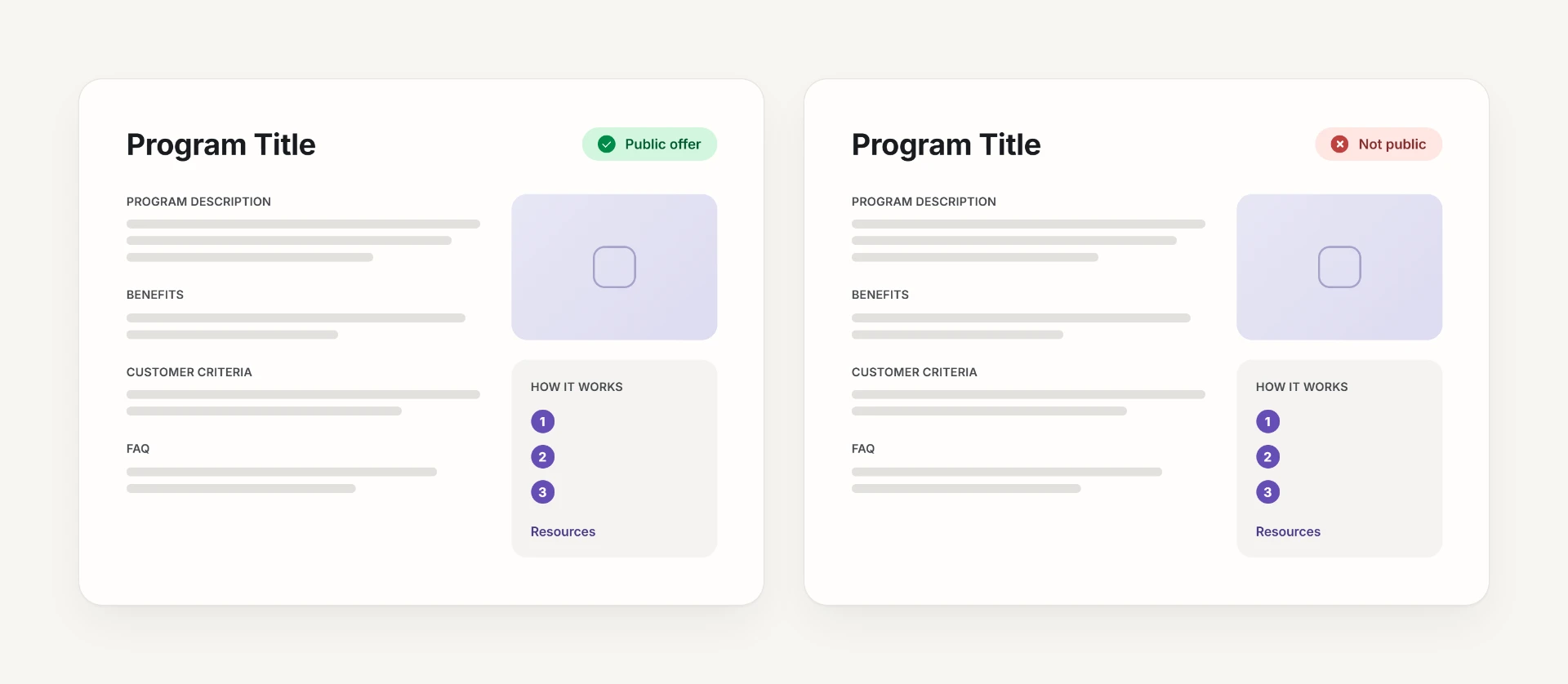
Launched targeted programs to address common deal blockers, including deployment incentives, trade-in offers, interoperability programs, and deal clinics designed to unblock stalled opportunities.
04

Align the ecosystem

Led licensing simplification, seller training, partner co-marketing, and business reporting to ensure customers, sellers, and partners were operating from the same GTM strategy.

Outcomes

What made the difference wasn't a single GTM program. It was a series of improvements across the customer journey that made Teams Rooms easier to understand, easier to buy, and easier to deploy. Over time, those changes helped turn strong market demand into sustained business growth.

$34M → $160M

Business scaled in 2 years

94%

Increase in monthly active devices after activation program launch

109%

Year-over-year revenue growth through the licensing and packaging overhaul period

90%

Of top channel partners adopted the Room Archetypes narrative within 6 months

30%

Lift in paid conversion driven by co-marketing programs across the partner ecosystem

#1

Most downloaded GTM resource in the segment — the Programs Playbook sellers called their "holy bible"

What I Learned

Customers don't buy products, they navigate systems. The biggest barriers to growth often sit outside the product itself. Understanding how customers evaluate, buy, and deploy a product often reveals friction that doesn't show up in a dashboard.

Positioning only works when other people can repeat it. A message isn't successful because it's clever. It's successful when customers, sellers, and partners all tell the same story without you in the room.

Revenue is usually a lagging indicator. The most useful signals show up much earlier. Tracking adoption, engagement, and pipeline health often reveals problems long before they appear in quarterly results.